Copying and distribution of the work without the author's consent is prohibited.
Sequel to the book "The Crazy Tanner"
Prologue
The door slammed shut with a dull thud, cutting Anna off from the rainy evening, from the wet street, from the shop window with the abandoned jacket. She leaned her back against the door and closed her eyes.
Silence. Homey, warm, but somehow alien.
She stood like that for a minute, maybe two, trying to feel the warmth of the dwelling, but her body still remembered the cold. Her clothes clung to her skin, her hair was wet and fell in heavy strands over her face. A shiver ran through her body — whether from the cold or from the nervous tension of the last hours.
"Need a shower," she said aloud, and her voice sounded hoarse, alien.
Anna took off her shoes, threw her wet sneakers by the door and went into the bathroom. There, without turning on the overhead light, she switched on the dim lamp above the mirror and began to peel off her wet clothes.
Her sweater stuck to her body, coming off with difficulty. Her jeans were heavy with water, she had to struggle to pull them down over her hips. She stood before the mirror in just her underwear, looking at herself — pale, with bluish lips, wet hair plastered to her temples.
Her underwear was soaked through too. She pulled it off, threw it into the laundry basket with the rest of her clothes. Turned on the shower, waited for the hot water to come, and stepped under the stream.
The first seconds were scalding. She hissed, inhaled, but didn't recoil. On the contrary — she turned her face, shoulders, chest to the hot flow, letting the warmth penetrate her numb body. Water streamed down her back, her legs, carrying away the cold and tension.
She stood there for a long time. Minutes passed, steam filled the bathroom, clouding the mirror with a white veil. Anna closed her eyes and allowed herself to think of nothing. Just stand and feel life returning.
Then she soaped herself, washing off the city grime, the rain, the fatigue. She washed her hair twice — the water ran murky, as if the last hours were washing away with it. She turned off the water, stood a little longer, listening to the silence broken only by drops falling from the shelves.
She dried herself with a large terry towel, rubbing her skin until it was red. Wrapped herself in it, stood for a moment, then took the hairdryer and began drying her hair. The hum of the hairdryer filled the bathroom, drowning out her thoughts. She looked at the fogged mirror, where only a blurred silhouette was visible, and mechanically ran the comb through her strands.
When her hair was dry and soft, she put on her favorite home shorts — old, worn, but so cozy — and a white tank top. She looked at herself in the mirror, now clear of steam. Pale, but no longer blue. Alive.
In the hallway, by the door, lay a pile of wet clothes. Anna picked up her jeans, about to throw them in the wash, and suddenly felt something in the pocket. Hard, warm.
The wallet.
She froze, holding it in her hand. Small, honey-colored, it pulsed with a faint warmth, like something alive. The very one Yevgeny had slipped her at parting. The very one she should have left in prison but had brought with her, she couldn't bring herself to abandon.
Anna clenched it in her fist and went into the room.
There she turned on the computer. The screen lit up, loading the desktop. Anna opened a document folder, found the file — the article about Yevgeny. The one she'd written after his arrest. The one that had started it all.
She reread a few paragraphs. Here's where he talks about his first steps in the craft. Here about disappointments. Here about loans, tools, chemicals. Here about how he searched for the formula.
"I thought the main thing was precision. Then — originality. Then — stitches. Then — hardware. Then — design. Then — tools. Then — chemicals. Then — expensive leather. And then I understood: you need everything together. Harmony."
Anna reread these lines and felt something resonate inside. As if he were speaking not only about leather, but about her. About her search. About her formula.
She tore her gaze from the screen and looked at the wallet. It lay on the table, pulsing with an even, warm light. Honey-colored, perfect, almost alive.
Anna took it in her hands, brought it closer to the light. The leather was incredibly soft, warm. The stitches — perfect. The embossing — the Aquarius sign.
"What am I to do with you?" she whispered, nervously biting her lip. "You frighten me. But you're important. This is all that's left of Zhenya."
She frowned, examining the wallet. In her gaze mixed fear, tenderness, incomprehension, and a strange, frightening attachment.
"Why can't I throw you away? Why are you still with me?"

The wallet pulsed in response. Its warmth grew slightly stronger, as if it were trying to tell her something. Something important. Something Anna couldn't yet hear.
She sat, clutching it in her hands, and stared into the darkness outside the window. The rain had stopped. The city was quiet in the pre-dawn stillness.
And the wallet pulsed. Waited. Knew she wouldn't leave.
That now they were together. Forever.
Chapter 1. The Return
She couldn't give him up.
The wallet lay in her pocket, warm, pulsating like a second heart. Every time Anna thought of throwing it away — and such thoughts came often, especially at night, when nightmares choked her with sticky tentacles — her hand would reach for it by itself, her fingers would stroke the smooth honey-colored leather, and warmth would spread through her body, calming, lulling her anxiety to sleep.
She knew this was wrong. Knew this wallet was not just a thing. Knew where it came from. But the magnetism was stronger than reason.
"You realize it's killing you?" she asked herself one morning, looking in the mirror. A pale, gaunt face with dark circles under the eyes stared back. She'd lost weight over the month, though she ate as usual. She slept more, but woke up exhausted.
The wallet in her robe pocket pulsed faintly. She thought she heard a quiet, satisfied sigh.
"I need you," rustled in her head. "And you need me. We feed each other. You give me life, I give you purpose. Isn't that fair?"
Anna closed her eyes. She'd grown used to this voice. Not even a voice — to the feeling of another presence that was always near. Sometimes it frightened her, sometimes calmed her. Now — it simply was.
"What purpose?" she asked aloud.
"You're a journalist. You seek the ideal. The perfect story. I'll help you find it."
She wanted to object, but the words stuck in her throat. Because lately, work really had become everything to her. She caught herself spending hours on articles, rewriting paragraphs, searching for precise formulations, as if her life depended on it. Her editor praised her — she'd never had texts of such quality before. But the price...
"What price?" she asked.
Silence. The wallet was quiet, but its warmth grew slightly stronger.
Chapter 2. The Formula of the Perfect Story
Anna sat at a table cluttered with books, printouts, and notebooks. The wallet lay nearby on the nightstand, pulsing with an even, calming warmth. She no longer noticed its presence — it had become part of her, like a heart or lungs. But right now, in this silence, she felt its approval.
She took a blank sheet and wrote at the top: Components of the Perfect Story.
Then she closed her eyes, recalling everything she'd learned, everything she'd read, everything she'd experienced herself. And she began to write.
1. Idea
The idea is the seed from which the text grows. Without it, the story is dead, like a piece of raw leather before tanning.
Anna underlined the word "seed." The idea must be alive, capable of sprouting in the reader's consciousness. It doesn't have to be global — sometimes the simplest thought, expressed at the right moment, changes the world. But it must be new. Not necessarily discovering America, but looking at it from a different angle.
Example: Yevgeny's story. The idea — "the pursuit of the ideal can destroy a person." Trite? Yes. But if shown through leather, through craft, through obsession — the idea comes alive.
Anna wrote: The idea must resonate with the reader, touch strings they didn't know existed.
2. Conflict
Conflict is the engine of plot. Without it, the story stands still, like a cart without wheels.
Anna identified three types of conflict:
External: man against man, against society, against nature.Internal: struggle within the hero's soul, doubts, fears.Metaphysical: against fate, destiny, higher powers.
In Yevgeny's story, the conflict was multi-layered. External — with creditors, with his mother, with a society that didn't accept his art. Internal — between the thirst for the ideal and the fear of failure. Metaphysical — with the very idea of perfection that led him to his death.
Anna added: Conflict must not be contrived but grow from characters and circumstances. And it must develop — from simple to complex, from external to internal.
3. Plot
Plot is "what and in what order." But not just chronology — the art of leading the reader along, making them turn pages.
Anna recalled classical schemes:
Linear plot — beginning, development, climax, denouement. Reliable but predictable.Retrospective — jumps in time, revealing secrets of the past. Holds intrigue.Circular — the ending returns to the beginning, forcing a reinterpretation of everything read.Mosaic — several plot lines intertwine, creating a three-dimensional picture.
For her article about Yevgeny, she chose retrospect: start with the arrest, then go back to the past, show the path to catastrophe. This allows the reader to become interested immediately, then watch with horror as the hero approaches the abyss.
Anna wrote: Plot must have rhythm — alternation of tension and release. And обязательно — unexpected twists, not for trick's sake, but for revealing characters.
4. Fabula
Fabula is what remains off-screen. Subtext, hints, understatement. It's like the air between words.
Anna knew: the best stories don't tell everything. They let the reader figure things out for themselves, feel them. When the author chews everything, the text becomes flat.
In Yevgeny's story, the fabula was his childhood, his father, his first love. Anna didn't write about this, but the reader guessed: the traumas of the past shaped his obsession.
She added: Fabula creates depth. The reader senses that there's more behind the text, that the author knows more but doesn't say. This evokes trust and respect.
5. Composition
Composition is the architecture of the text. How parts are arranged, what follows what, how they're connected.
Anna listed the main elements:
Headline — the hook that makes the reader open the text.Lead — the first paragraph, which must grab attention and promise development.Exposition — introduction to the situation.Rising action — escalation of conflict.Climax — peak of tension.Resolution — resolution of conflict.Finale — the aftertaste, the thought the reader carries away.
She remembered how she structured the article about Yevgeny: headline "The Price of the Ideal," lead — the scene in the workshop where he strokes leather, then gradual immersion in his past, climax — the murder, resolution — the arrest, finale — reflection on whether the ideal is worth life.
Anna wrote: Composition must be flexible. Sometimes it's worth breaking the rules — starting with the climax, then going back, using montage. The main thing is that it serves the idea.
6. System of Images
Images are characters, but not only. They're also objects, symbols, even abstract concepts that come alive under the pen.
In her article about Yevgeny, the images were:
Yevgeny himself — the obsessed master, victim and executioner simultaneously.Leather — symbol of the search for the ideal, living material that demands a soul.The granite slab — monument to hopes and instrument of death.The mother — voice of reality he didn't hear.The wallet — the result, the masterpiece that became evidence.
Every image must be alive, three-dimensional, even if appearing for a couple of lines. Each must have its own story, its own voice.
Anna added: The system of images creates a world. The reader must see it, hear it, smell it. Then they'll believe.
7. Chronotope
Chronotope is the time and place of action. They are not just background, but active participants in the story.
In her article, time flowed unevenly: years of searching compressed into paragraphs, while minutes of the murder stretched over pages. This created a sense of the significance of each moment.
The place — the workshop — became a separate character. The smell of leather, the creak of tools, the lamplight — all worked for the atmosphere.
Anna wrote: Time and place should not be mere decoration, but a means of conveying mood and meaning. A street can oppress, a room can suffocate, a forest can frighten or soothe. Use this.
8. Style and Language
Style is the author's voice. Recognizable, unique, like a fingerprint.
Anna listed what style includes:
Vocabulary — choice of words. Simple or complex, concrete or abstract.Syntax — sentence length, rhythm. Short phrases create tension, long ones immerse in reflection.Intonation — irony, pathos, lyricism. The ability to change register.Metaphors and comparisons — they make text figurative, but it's important not to overdo it.
In her article, she tried to be precise but not dry. She used short phrases in tense scenes and long ones in reflections. She took metaphors from the world of leather: "thoughts tanned his soul," "hope wore thin like old edges."
Anna added: Style is the music of the text. The reader may not notice it, but if the music is false, they'll put the book down. Be honest with your voice.
9. Harmony
Anna leaned back in her chair and reread what she'd written. Eight components. Each important. Each working in its place. But separately, they were just a list.
And suddenly it dawned on her.
She saw it not as a thought, but as an image: an orchestra. Violins, cellos, flutes, drums — each instrument important. But if everyone plays separately, you get cacophony. Only together, under a conductor's direction, do they create a symphony.
She grabbed her pen and wrote:
Harmony is when all components work together, enhancing each other. Idea is revealed through conflict, conflict drives plot, plot unfolds in composition, images fill space, chronotope creates atmosphere, and style gives it all a unique sound. Fabula adds depth, leaving room for the reader's interpretation.
This is the formula of the perfect story.
She put down her pen and looked at the wallet. It pulsed evenly and warmly, as if nodding in time with her thoughts.
"You understand," rustled the voice. "You're almost there."
Anna smiled. For the first time in a long while, she felt not just satisfaction, but delight — the very delight a master feels when finding the perfect solution.
She took the wallet in her hands, stroked the warm honey-colored leather.
"Thank you," she whispered. "Without you, I couldn't have done it."
The wallet sighed contentedly. And its warmth grew slightly stronger — as if in gratitude.
Anna didn't notice how she'd paled another shade. How new shadows had settled under her eyes. How the fingers clutching the wallet had become almost translucent.
She looked at her notes and saw before her not just an article, but a path. The path to the ideal, worth everything.
Even life.
Chapter 3. Epiphany
It happened at night.
Anna was sitting over yet another article, editing it for the twentieth time. Her eyes were closing, her hands trembled, her head hummed. She leaned back in her chair, closed her eyes — and suddenly it all came together.
She saw it not as a thought, but as an image. All the components — idea, conflict, plot, fabula, composition, images, chronotope, style — they don't work separately. They must be in harmony. Like in an orchestra, where each instrument is important, but only together do they create a symphony. You can't pull one part too much. You need balance. You need a sense of measure.
"Harmony," Anna whispered.
And at that moment, Yevgeny's face flashed before her eyes. His workshop, cluttered with jars and tools. His obsession. His search for perfect leather. His formula.
"Perfect leather + perfect tanning + perfect cut + perfect hardware + perfect tools + perfect chemicals. You need harmony."
She remembered these words he'd once said. And understood: they had walked the same path. Only he sought the ideal in leather, and she — in text. And both had arrived at the same conclusion.
"We're like mirrors," Anna whispered. "You reflect in me, I in you."
She took the wallet in her hands. It burned with heat, pulsed rapidly, like a hummingbird's heart. And in this pulse, she sensed agreement.
"Yes," the voice responded. "You both sought the ideal. You've found it. Now you understand."
"I understand," Anna nodded. "But I also understand the price."
"There's always a price. His creator gave his life for the ideal. You're giving yours now. Isn't the ideal worth it? Isn't perfection more important than life?"
Anna was silent. She looked at her hands — pale, almost translucent, with blue veins. In the mirror opposite, a creature resembling her reflected back: hollow cheeks, eyes burning with feverish fire, gray streaking through her light brown hair.
"More important," she said quietly. "Probably more important."
The wallet sighed contentedly.
Chapter 4. Shadow
Her editor called her in a week later.
"Anna, what's happening to you?" he looked at her with concern. "You've lost ten kilos, dark circles under your eyes, your hands shake. Are you ill?"
"I'm fine," she answered, but her voice sounded hollow, as if from a barrel. "I've brought an article. The best of my life."
She handed him a folder. The editor took it, began reading. After five minutes, he looked up.
"This is brilliant," he said simply. "I've never read anything like this. This... this isn't an article. This is literature. How did you manage it?"
Anna smiled. The smile was strange — not so much happy as mad.
"I found the formula," she answered. "Harmony."
The editor wanted to ask more, but she was already standing.
"I have to go."
She left the office and wandered down the street. Her legs barely obeyed. In her pocket, the familiar warmth pulsed.
She knew she didn't have long to live. A month, maybe two. The wallet had drained almost everything from her. But she'd succeeded. She'd written what she wanted. She'd understood what she sought.
"You don't regret it?" the voice asked.
"No," Anna answered. "Nothing to regret."
She stopped at that same shop window where a month ago she'd left her jacket. The jacket was gone — someone had taken it. In its place lay another, new one. Anna looked at the leather bags, belts, wallets and felt nothing. Neither nausea nor fear. Only fatigue.
"I wonder," she whispered, "who'll be next?"
The wallet was silent. But its warmth grew slightly stronger — anticipating.
Anna walked on. In her pocket, pressed against her thigh, lay a small honey-colored wallet — the perfect creation of a mad master. It waited. It always waited.
Chapter 5. The Friend
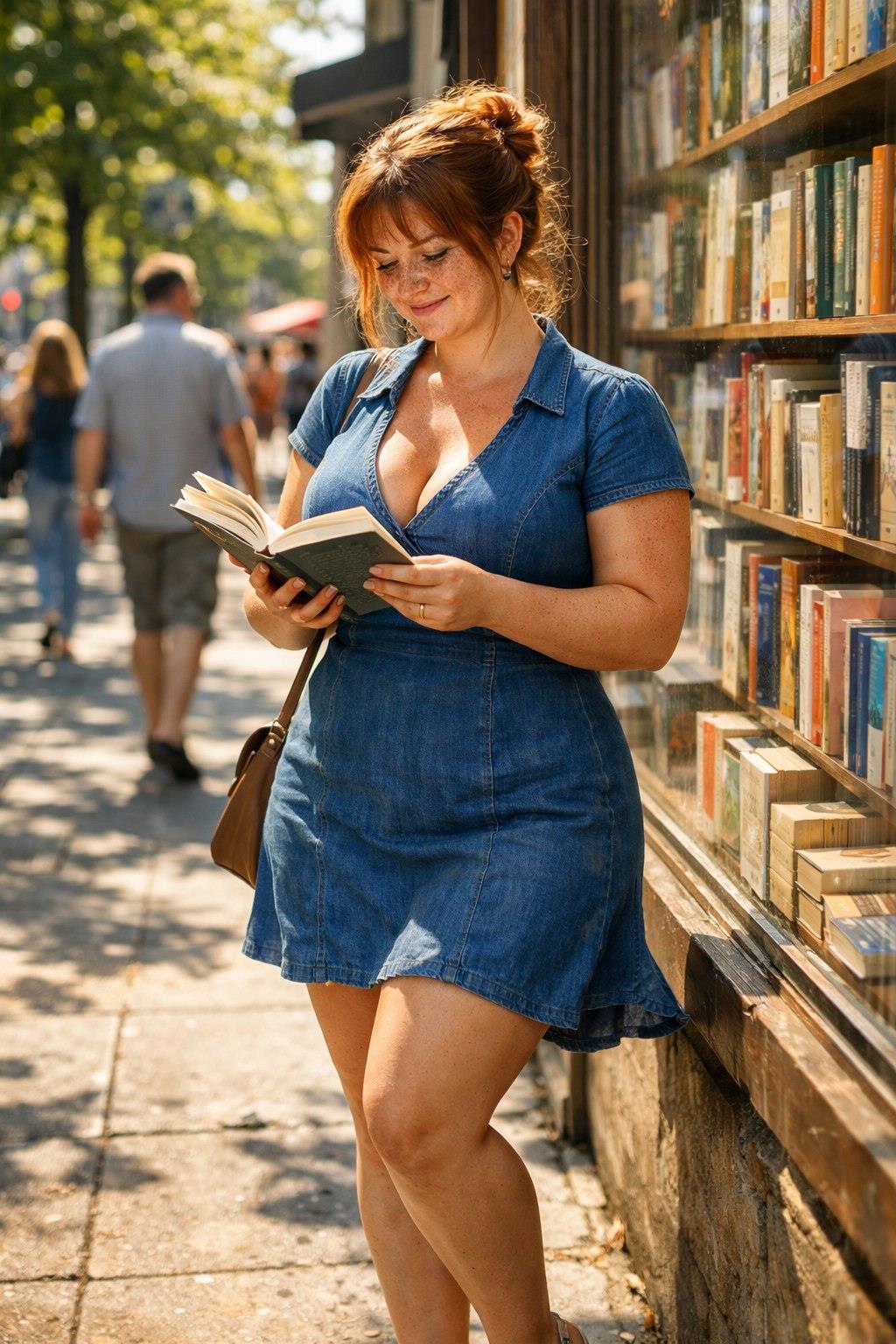
Olga hadn't seen Anna for almost a month.
At first, she put it down to busyness — journalists always have burning deadlines. Then to Anna grieving over that tanner, the arrest story. But when calls went unanswered and messages remained unreplied, Olga became genuinely worried.
She came herself, without warning. She'd had keys to her friend's apartment since their student days — just in case. She opened the door and froze.
The hallway smelled musty, with something sweetish and elusive mixed in. On the floor — stacks of newspapers, cups with dried tea. From the room came the measured clatter of keys.
"Anya?" Olga called, throwing off her jacket. "You home?"
The clatter stopped. Anna appeared in the doorway.
Olga gasped. Her friend had lost so much weight her cheekbones protruded; her skin had taken on a grayish tint, dark blue circles under her eyes. Her hair hung in dull strands. But most frightening were her eyes — they burned with a feverish, unhealthy fire.
"Olya?" Anna's voice sounded hollow, as if from far away. "What are you doing here?"
"Doing here?" Olga approached, grabbed her by the shoulders. "Anya, look at you! Have you eaten today? Do you even sleep?"
"No time to sleep," Anna freed herself and returned to the table. "I'm working."
Olga followed her. The table was covered with printouts, journalism theory books, diagrams, and graphs. In the corner, on the nightstand, lay that very wallet — honey-colored, warm, pulsing with a barely perceptible light. Olga noticed it immediately: something evil emanated from it.
"What's that?" she nodded at the wallet.
"A gift," Anna smiled a strange, absent smile. "From Zhenya. Remember, I told you?"
"I remember," Olga frowned. "You said it was his best work. But Anya... he died from it. This wallet... there's something wrong with it."
"Everything's right with it," Anna took the wallet in her hands, stroked it. It pulsed in agreement. "It helps me think. You see, I'm searching for the formula. The perfect article. Like he searched for perfect leather. We're connected."
Olga looked at her friend and realized with horror: she was serious. She really believed this nonsense.
"Anya, let's go to the doctor," Olga suggested gently. "Just get checked. And the wallet... let's throw it away. It's killing you."
"Don't you dare!" Anna jerked back, pressing the wallet to her chest. Her eyes flashed. "You don't understand anything! It's given me more than you have in all our years of friendship! It taught me to see the essence!"
Olga stepped back. For the first time in her life, she was afraid of her friend.
"Okay," she said conciliatorily. "Okay. I won't touch it. But let me at least clean up here. Cook something. You need to keep up your strength."
Anna hesitated, then nodded:
"Just don't touch the wallet."
Olga cleaned, washed dishes, cooked soup, while watching Anna out of the corner of her eye. Anna sat at the table, sorting papers, but kept touching the wallet, stroking it, whispering something. The wallet glowed in response.
"It's not just a thing," Olga realized. "It's something else. I need to find out."
Chapter 6. Olga's Investigation
She started with the internet.
She typed into search: "tanner Zamyatin murder," "workshop on Kozhevennaya," "human leather." There were few articles, but one came up — a local newspaper wrote about the trial, about Zamyatin being declared insane and sent to a psychiatric hospital. The wallet was mentioned — "evidence recognized as material proof." Then the trail went cold.
But Olga wasn't satisfied. She felt something deeper here than just a criminal case. Anna was changing before her eyes, and these changes were frightening. Ordinary journalistic obsession? No. This smelled of something else.
She dug deeper.
Leatherworker forums, craftsmen's chats, closed Telegram groups. She wasn't just looking for information about Yevgeny — she was looking for those who might have encountered something similar. Creations that go beyond ordinary craft.
On the third sleepless night, she stumbled upon an old forum dedicated to unusual artifacts. There, among discussions of cursed paintings and enchanted jewelry, a message from five years ago flickered:
"Heard from a master: if a tanner puts not just his soul but something more into his work — the thing can come to life. But the price is always blood. Don't believe fairy tales, but beware of masters with mad eyes."
The author's nickname was deleted. But Olga copied the message and started digging in that direction.
She found old occult books in an electronic library. Downloaded them, waded through complex texts about homunculi, golems, the animation of matter. There, in one chapter about medieval craftsmen, she read:
"A master who creates a thing from flesh imparts part of his soul to it. But if the flesh is taken from a murdered person, the soul of the murdered enters the creation. Such a thing thirsts for life — and will draw it from everyone who touches it."
Olga's blood ran cold. Flesh from the murdered. Soul of the murdered. Drains life.
She remembered Anna telling her: the wallet was made from the skin of the collector, the one who died in the workshop.
"This isn't just legends," Olga whispered. "This is real."
She dug even deeper. Found an old blog by someone calling himself a "hunter of cursed things." The blog hadn't been updated for two years, but the posts remained. She read dozens of stories: about watches that stop their owners' hearts; about mirrors that show death; about dolls that move at night. And among them — a story about a ring made from the bone of a deceased master.
"The ring had twelve owners. All died within a year. The last, realizing what was happening, tried to destroy the ring — smashed it with a hammer. But it reassembled itself in a week. Such things cannot be destroyed by ordinary means. They must be burned in consecrated fire or drowned in running water with prayer. Otherwise, they return."
Olga froze. The wallet. She'd seen Anna drop it, seen it fall to the floor — and nothing. Intact. Invulnerable.
"Damn," she breathed.
That same night, she wrote to Rodion. Told him everything: about Anna, about the wallet, about her fears. The reply came after several hours — Rodion had apparently thought for a long time.
"I knew Zhenya. Corresponded with him. In his last letter, he wrote something strange: 'I created not just a thing. I created a door. Don't go near it.' I didn't understand then. Thought it was the ramblings of a madman. Now I understand. Girl, be careful. Such things should not exist. And if your friend carries this with her... I'm afraid destroying the artifact may be the only way to save her. But know: the one who destroys may become the next victim. The thing protects itself."
Olga leaned back in her chair. Dawn was graying outside the window. She hadn't slept for two days, but felt no fatigue. Only cold inside and firm resolve.
"I'll save you, Anya," she said aloud. "Even if I have to burn that filth. Even if it kills me."
She looked at the photograph of Anna on her desk. They were smiling there, happy, carefree, many years ago.
"I promise."
The wallet, many of kilometers away in Anna's pocket, suddenly pulsed stronger. As if sensing the threat. As if preparing to fight.
Chapter 7. The Decision
She came to Anna three days later. Brought food, chatted about trivialities, but kept watching the nightstand where the wallet lay. Anna seemed to forget her presence — sat typing an article, occasionally touching the honey-colored leather.
"Anya, I'll put the kettle on," Olga said and went to the kitchen.
But instead of the kettle, she paused in the hallway, listening. Keys clattered in the room. Olga silently returned, peered in. Anna sat with her back to the door, absorbed in her text.
The wallet lay on the nightstand, pulsing with warm light.
Olga took a step, another. One more. Reached out...
"What are you doing?" Anna's voice cut sharply, like a slap.
Olga froze. Anna was already looking at her, and in her eyes swam something terrible — a mix of hurt, anger, and mad obsession.
"I want... I just want to look," Olga lied.
"Don't lie," Anna stood, slowly approaching. "You want to take it. Destroy it."
"Anya, this is insane!" Olga cried out. "Look at yourself! You're dying! This wallet is sucking the life out of you! It killed Yevgeny, now it's killing you!"
"It gives me strength!" Anna shouted. "You don't understand what the ideal is! You've always lived lightly, never sought depth! But I seek! I've almost found it!"
"You'll only find death!" Olga lunged for the nightstand, grabbed the wallet.
In that same second, Anna threw herself at her.
Chapter 8. Death of a Friend
They grappled. Olga was heavier, but in her fit of madness, Anna proved unexpectedly strong. They fell to the floor, rolled, tearing the wallet from each other. It pulsed, glowed brighter and brighter, as if feeding on their fury.
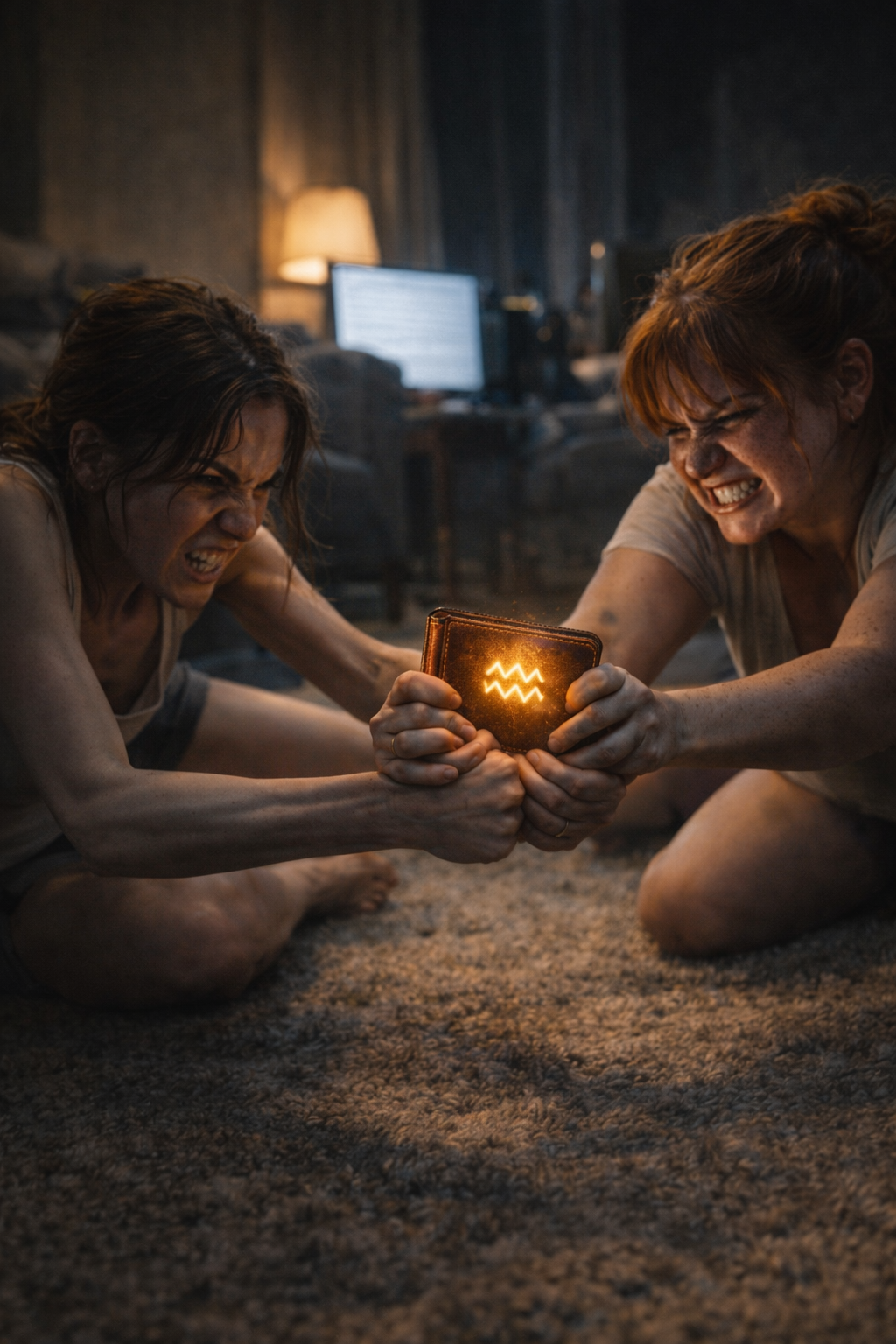
"Give it back!" Anna screamed. "It's mine!"
"No! I'll save you!" Olga clutched the wallet with all her strength.
She tried to stand, slipped on scattered papers, and fell. The fall was awkward, quick. Olga's temple struck the metal leg of an armchair with a dull thud.
Anna froze. The wallet fell from her friend's weakening hands and rolled across the floor, stopping against the wall.
"Olya?" Anna's voice trembled. "Olya, get up."
Olga lay motionless. From under her temple, a dark pool slowly spread.
"Olya!" Anna screamed, throwing herself at her. "Olya, please, no! I didn't mean to! I didn't..."
She shook her friend by the shoulders, but they were already growing cold. Olga's eyes, wide open, stared at the ceiling with a glassy, unseeing gaze. The freckles on her cheeks now seemed not charming but terrible — drops of frozen life.
Anna sat on the floor, clutching her head in her hands, rocking back and forth. From her chest came a howl — quiet, animalistic, hopeless.
The wallet lay against the wall and pulsed. Its warmth grew brighter, richer. It had absorbed another life — and it liked it.
Chapter 9. After
Anna didn't remember calling the police. Didn't remember explaining that her friend had slipped and fallen. They believed her — no signs of struggle were found, the wallet lay aside, Olga could indeed have fallen accidentally. Reports, funeral, condolences.
She was alone now.
The apartment grew quiet. Only the clatter of keys broke the silence. Anna worked. She wrote an article — the best of her life. About friendship, about loss, about the search for the ideal. The text flowed by itself, words formed perfect sentences, paragraphs breathed with rhythm.
The wallet lay nearby, warm, satisfied.
"You're almost there," it whispered. "A little more. Finish it. Complete it. Become perfection."
Anna wrote. She no longer felt hunger or fatigue. Only her fingers running over the keys, and the warmth at her thigh.
When she finished, she leaned back in her chair and read what she'd written. It was brilliant. The best thing she'd ever created.
"There it is," rustled the voice. "Perfect harmony. You've found it."
Anna smiled. The smile was pale, almost translucent, like herself.
"Yes," she whispered. "I've found it."
She stood, approached the mirror. A shadow stared back — thin, gray-haired, with eyes burning with a final fire.
"You know you're going to die," said the voice. "You've given me everything."
"I know," Anna answered. "But I succeeded."
She returned to the table, laid her head on her arms. The wallet pulsed beside her, warming her one last time.
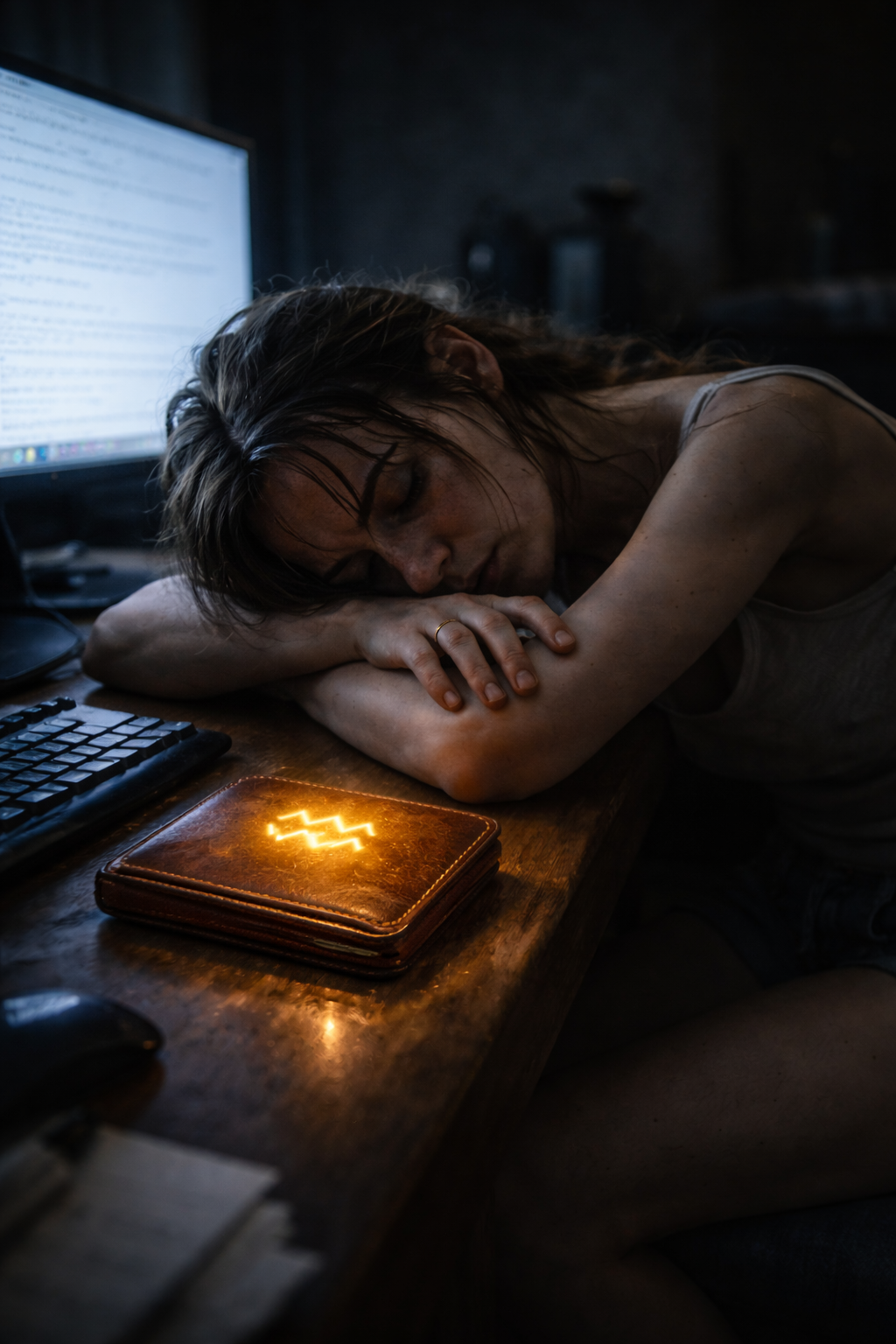
In the morning, a courier delivering an order found her. Anna sat at the table, her head fallen onto the manuscript. Her face was calm, almost happy. On the nightstand lay the wallet — warm, honey-colored, perfect.
The courier didn't notice how, for a moment, it stirred and pulsed stronger. As if in anticipation.
Epilogue
A week after Anna's death, distant relatives came to her apartment. They sorted through things, gathered documents, separated what to throw away and what to keep. None of them knew what burden these walls had held.
The doorbell rang.
A man sat in a wheelchair on the threshold. Young, with lively eyes and dark hair. He introduced himself as Rodion, Anna's friend. Said she'd corresponded with him, that he needed to pick something up — a small handmade wallet she'd promised to return.
The relatives shrugged: they hadn't found any wallet. They let him look around the room — maybe he'd find it.
Rodion wheeled into the room. Everything here was saturated with her presence: stacks of papers, books, printouts, diagrams. On the table — a dead monitor, a cup of dried coffee. Rodion slowly circled the room, checking drawers, shelves. The wallet wasn't there.
About to leave, he noticed a neatly stacked pile of sheets on the nightstand. On top lay a manuscript — Anna's last article. He picked it up, read the title: "The Formula of the Ideal. Confession of a Mad Journalist."
He read. Page after page. The text was mesmerizing — every phrase hit its mark, every metaphor breathed life. It was perfect. It was brilliant. It was the very formula she'd sought.
And Rodion understood: this article must never be published.
It was written at the cost of a life. It had drained Anna's last strength. If printed, it would work like that wallet — draw readers in, change their fates, perhaps even kill. A new mystical entity, born of madness and talent.
"Enough," he whispered. "Enough perfect articles from mad authors in this world. No need to breed new entities."
He took the manuscript, wheeled into the bathroom. Laid the sheets in the sink, flicked his lighter. The paper burst into flame, burning with bright, greedy fire. Rodion watched as lines, words, thoughts turned to ash. As what had cost Anna her life disappeared.
"Goodbye, Anna," he said quietly. "You were talented. But some things should remain only yours."
He washed the ashes down the drain, dried his hands, and left.
Outside, rain was beginning to fall.
Anna's jacket, with the wallet in its pocket, was thrown away by the relatives. Taken to the city dump along with other trash. At night, a homeless man rummaging through the waste felt something warm in a pocket. Pulled it out — a small honey-colored wallet. Beautiful, almost alive.
"Lucky," he muttered, tucking away his find.
The wallet pulsed contentedly. Ahead lay a new life. A new victim. A new ideal.
Somewhere in the city, a young journalist just starting her career was writing an article about the homeless. She didn't yet know she would meet someone who would show her the formula for success.
But the wallet knew. It always knew.
And it also knew that Anna hadn't given her life in vain. The story of the mad tanner had already gone out into the world, where it would reap its harvest, finding followers. The text lives its own life, and no one can stop it.
The end of the second book.
The story was written by the author under the pseudonym Seraphim on March 1, 2026.
https://author.today/u/serafim30
Telegram username: @Seraflm
 ТЕЛЕГРАМ
Канал с обзорами, анонсами новинок и книжными подборками
 Книжный Вестник
Бот для удобного поиска книг (если не нашлось на сайте)
 Поиск книг
Свежие любовные романы в удобных форматах
 Любовные романы
Детективы и триллеры, все новинки
 Детективы
Фантастика и фэнтези, все новинки
 Фантастика
Отборные классические книги
 Классика
 ВКОНТАКТЕ
Библиотека с любовными романами, которая наверняка придётся по вкусу женской части аудитории
Любовные романы
Библиотека с фантастикой и фэнтези, а также смежных жанров
Фантастика
Самые популярные книги в формате фб2
Топ фб2
книги